Sex room ideas vs. bespoke design: what's the real difference?
A room that belongs entirely to its owner is one thing. A room that actually reflects who lives in it is another. In the previous post, we explored the first idea. This post is about the second: what happens once the door is closed and the space still has to work, for the people using it, not for a mood board.
Search "sex room ideas" and the results are mostly furniture links and mood boards. Real design is different: it starts with how people actually move through a space, not with what's trending this month. The short version: ideas are decoration added to an existing room. Design is a room built around the people using it, from the frame out, meant to last.
The look everyone's chasing right now
Pinterest's 2026 trend forecast, built from billions of searches across roughly 600 million monthly users, names an aesthetic it calls "vamp romantic": deep-hued walls, layered textiles, low lighting, antique accents. A related trend, "opera," leans into jewel tones, velvet, and sensual, immersive rooms that treat the wall itself as a canvas. Boudoirs get a specific mention.
Interesting: the internet has fully caught up to something designers working in custom, made-to-order spaces have been doing for years. "Sensual, dark, immersive" is now mainstream enough to have its own trend report. That's part of the problem: in a photo, a quick AI mood board and a properly designed room can look almost identical. The real differences, the ones that matter once the room is actually being used, are easy to miss when shopping by mood board alone.
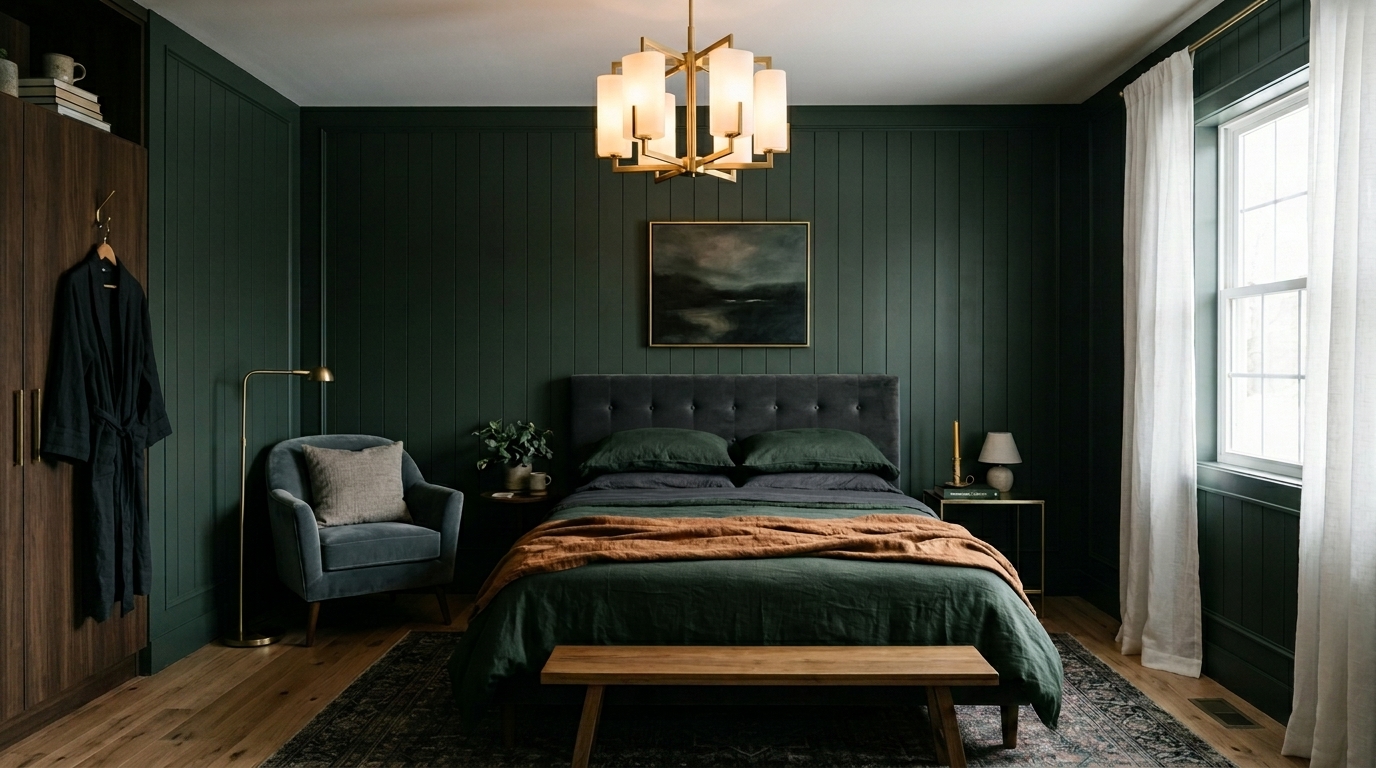
Where DIY hits a ceiling
A few throw pillows, some strategic lighting, and a piece of furniture ordered online will produce a room that looks good in photos. What that approach usually won't produce:
- Materials chosen for how they hold up under real use, not just how they photograph
- A layout planned around comfort and privacy, rather than around what happened to fit in the room
- Integration with the rest of the home, so the space doesn't feel like a bolt-on
- Craftsmanship built to be touched, sat on, and used for years, not assembled once and left alone
None of this shows up in a single photo. It shows up six months in, when the room either still earns its keep or quietly turns into storage.
What "tailored" actually means here
A properly designed intimate space starts the way any serious interior project does: understanding how the room will actually be used, choosing materials built to last, planning the layout around real bodies and real privacy needs, not a template. Leather, stone, brass: the same considerations that go into a well-built kitchen or a considered primary suite go into a room like this. The only difference is the brief. The room isn't just private, the way a locked door is private. It's built to actually belong to the people who use it, not just shelter them.
A broader cultural shift supports this way of thinking too. A lot of 2026's wellness and relationship conversation keeps circling the same idea: slower, more intentional connection over rushed, distracted encounters. A room built with real intention, rather than assembled in an afternoon, is quite literally the physical version of that idea.
Why getting a few quotes doesn't apply here
For most home renovations, comparing designers is smart. For this category, that instinct works against the goal. Every additional consultation, every extra mood board shared over email, is one more person who now holds something intimate: details about a home, and about the people living in it. Discretion isn't a nice-to-have in this category, it's structurally part of the investment itself. The fewer people involved from the very first conversation, the better the outcome tends to be, in every sense.
This isn't a fringe purchase anymore
A Netflix series, How to Build a Sex Room, turned this into dinner-party conversation a few years back. The category didn't disappear once the show left the conversation, it kept growing quietly in the background. The broader sexual wellness sector is now a global market worth tens of billions of euros annually, still growing at a healthy pace. Spaces like this represent a real investment, on par with a considered kitchen or primary suite renovation, not an impulse buy.
The room, not the mood board
A trend report can suggest what a room should look like this year. It can't capture how a room should feel to actually live in. That part only comes from a room built with real intention, by people who think about the craft the same way whether the brief is a kitchen or something far more private. The goal was never decoration. It's a space for connection, for unwinding, for celebrating whatever this particular chapter of life looks like.